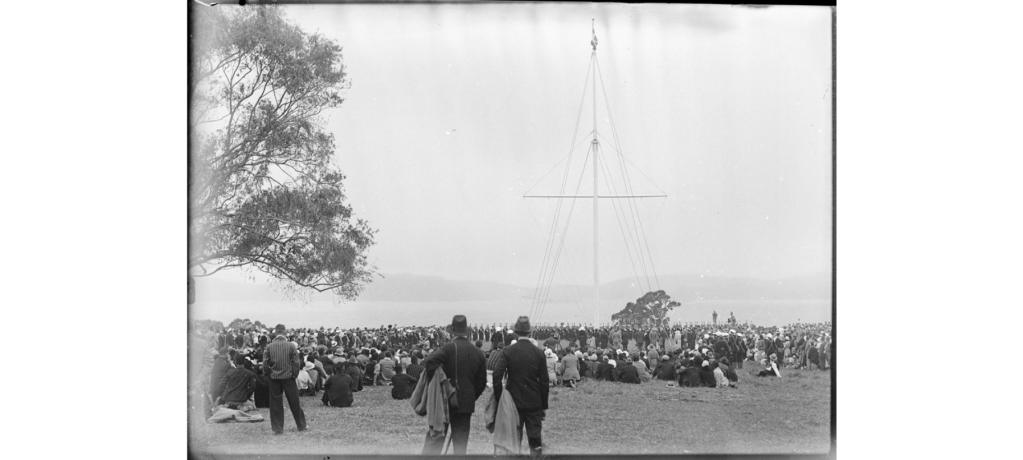
Yesterday, February 6, New Zealand marked Waitangi Day. Waitangi Day commemorates an agreement made in 1840 between representatives of the British Crown and (ultimately) more than 500 rangatira Māori, the Treaty of Waitangi (in Maori, Te Tiriti o Waitangi). It resulted in the declaration of British sovereignty over New Zealand by Lieutenant-Governor William Hobson in May 1840. Although it was intended to create unity, poor translations of the treaty, misunderstandings and breaches of it, have caused conflict and challenge ever since. From the 1970s a new generation of urban and well-educated Māori challenged what they saw as the failure of governments to honour the Treaty. Some called the Treaty a fraud. Today, the general public know a lot more about the treaty, and efforts to honour the treaty and its principles have expanded.
As a Pakeha, I am not indigenous to Aotearoa. Emotionally yes - it is my home, the only home I have ever known. Technically no. For me to claim 180 years of direct ancestry in New Zealand is a source of pride, but it hardly compares to Maori who have been here from around 1300 AD.
My claim to belonging is through being descended from the settlers who agreed to the Treaty. To be honest, there is no other place for me. I would not choose to live permanently in England, Ireland or Scotland, my ancestral homelands. I don’t recognise myself in those cultures any more than they recognised me when I visited. My children, on the other hand, have a legitimate claim. They descend via their father from the Ngāpuhi iwi and belong to the Te Māhurehure hapu of Waimā in the Hokianga. Their chiefs Mohi Tāwhai and Arama Karaka Pī signed at Mangungu on 12 February 1840.
Waitangi Day is a chance for most to enjoy a summer’s day off work with family and friends. It was not always celebrated, being only officially recognised as New Zealand’s national day in 1960. In 1974 it was renamed New Zealand Day and made a nationwide public holiday, reverting its name to Waitangi Day in 1976.
In honour of Waitangi Day, I thought i’d celebrate the immigrants to New Zealand in my family (both the Sherrock and Earle sides), listing their ships and dates of arrival from earliest to most recent.
arrived abt. 1300 — Ngātokimatawhaorua waka — Sherrock family

The arrival of the Polynesian navigator Kupe in the Matawhaorua canoe is legendary in the history of Ngāpuhi. The Matawhaorua canoe brought Kupe back to Hawaiki from the Hokianga Harbour. The canoe was re-adzed and renamed Ngātokimatawhaorua before Nukutawhiti captained it on another voyage to New Zealand. For the celebrations marking the centenary of the Treaty of Waitangi in 1940, a new Ngātokimatawhaorua was built. My family’s Ngāpuhi connection is via Moka Te Wao Paehangi and Hinewai of the Te Mahurehure hapu. Their daughter Maraea Kuri Te Wao Moka married Thomas Cassidy (see below).
Arrived Apr 1831, AUCKLAND — Sir George Murray — SHERROCK family
Thomas Cassidy, born in Navan, Meath, Ireland, made his way to New Zealand having served seven years penal servitude in New South Wales for stealing a pig. A sawyer by trade, Thomas settled in the Hokianga and married Maraea Kuri Te Wao Moka of the Te Māhurehure hapu. Being Catholic, he and Maraea sailed to Sydney to be married in 1835 by the nearest Bishop, after which she and their son were baptised. It is possible that Maraea was the first Maori converted to Catholicism.
ARRIVED ABT. 1840, AUCKLAND — ship as yet unknown — sherrock family
Patrick Heath and Bridget Cusack, originally from Ennis, Clare, Ireland arrived in Botany Bay, Sydney, New South Wales on 30 Sep 1839 on the ‘Amelia Thompson’ as assisted married immigrants. Within a short time, Patrick found employment as a gardener/labourer for Captain William Hobson, who was about to head to New Zealand to oversee the signing of the Treaty of Waitangi. After Hobson’s death, Patrick became a farmer and landowner in Northcote, Auckland.
Arrived 20 April 1841, WELLINGTON — Olympus — earle family
Thomas Mason and Jane Morris, my 3 x great-grandparents, arrived in Wellington from England. Both were wealthy enough to have travelled as cabin passengers. Jane was pregnant with their first child. Thomas was from a family of Quakers, but had left the church before marrying Jane (a non-Quaker) in order to avoid being disowned by his family. The couple bought a section at Taita, where, except for one short interval in Tasmania, they lived for the rest of their lives, bringing up seven sons and three daughters (a fourth daughter and two sons died in infancy). Thomas Mason was a widely reknown agriculturalist who developed a programme of collection and acclimatisation of plants and trees that continued all his life. His 12½-acre garden was said to be the finest in New Zealand. When he listed his plants in 1896 there were 1,400 species, as well as many varieties of trees, shrubs and smaller plants and bulbs. The garden was open to the public and known as ‘The Gums’ or ‘Mason’s Gardens’. Part of the property still exists as Avalon Park.
Arrived 22 Oct 1841, WELLINGTON — Oriental — Earle Family
Robert Henry Wilton and Elizabeth Denman, my 3 x great-grandparents left Montacute, Somerset, England for a new life in New Zealand. They were hoping to join Elizabeth’s sister, Charlotte (Denman) Hockey who had left England with her family on the ‘Prince Rupert’. Sadly, their ship was wrecked at the Mouille Point battery on 4th Sept 1841 after entering Cape Town Bay. Charlotte died but the rest of the family stayed on in South Africa. Robert and Elizabeth brought six of their children, leaving behind only their eldest daughter Ann and son Nun (who sailed to New Zealand in 1858). They subsequently farmed at Ohiro, Wellington and had four more surviving children in New Zealand.
arrived 9 feb 1842, nelson — lloyds — earle family
Dr George Frederick Bush, born in Abson, Gloucestershire, arrived as surgeon superintendent aboard the New Zealand Company ship, the Lloyds. The voyage, bringing the families of the preliminary expedition men, had one of the worst records of infant deaths and adult immorality. During the voyage 65 children died, including his own daughter with his first wife, Louisa Martin. George and the ship’s Captain were found culpable and received no payment for the voyage, with Bush also fined for each passenger death, leaving him in debt to the Company. Despite the ignominious start, George established a practice in Nelson and owned 30-acre ‘Apple Tree Farm’ in Waimea. George and Louisa had three more sons in quick succession, although only two survived. Louisa died of influenza in 1848. George remarried in 1849 to my 3x great-grandmother Henrietta Alexander, a governess from Edinburgh. They had six children, including my 2x great-grandmother, Henrietta Alice Bush, who married Henry Flockhart Christie. George sold part of his farm the year he and Henrietta married, and he began a flour milling enterprise, erecting a windmill which is clearly identifiable in photographs of old Nelson and known as ‘Bush’s Windmill’. It was never profitable and ceased operation in 1862. George was a member of the Nelson Provincial Council between 1853-1857. He died suddenly in 1863 and is buried at Hallowell Cemetery alongside his first wife Louisa.
arrived 22 Mar 1845, Auckland — H.M. North Star — Sherrock Family
Bernard McDonnell a.k.a. Bernard McDonald arrived in Auckland with part of the 58th Regiment, also known as ‘The Black Cuffs’, sent from Sydney, New South Wales as part of the British Government’s response to Hone Heke’s fourth and final attack on the flagpole and subsequent razing of Kororāreka (Russell) in the Bay of Islands. An Irishman from Clones, Monaghan, he had enlisted at Cavan at the age of 19 and had already served 10 years in Ceylon (present-day Sri Lanka). In 1843 the 58th Regiment took over garrison duties from the 80th Regiment in New South Wales. Bernard fought in the battles at Puketutu, beside Lake Ōmāpere, Ōhaeawai and Ruapekapeka Pā. His wife and children remained in Sydney during the fighting. The 58th returned to Sydney briefly in December 1846. They were then called back to New Zealand, arriving between June and September 1847. In 1849, suffering from rheumatism, Bernard took his discharge in New Zealand. He settled with his wife and children in the inner city, initially farming, then contracting to supply the provincial government with firewood, carting scoria and fixing roads. He was actively engaged in changing the view of Auckland’s foreshore to that which we see today as his was the winning tender to remove Britomart Hill and use the soil to fill in the reclamations west of Queen St wharf.
arrived 12 Jul 1847, Auckland — pestonjee bomanjee — sherrock family
Elizabeth Kane, the wife of Bernard McDonald above, and also originally from Ireland, arrived in Auckland from Sydney with the other wives and children of the 58th Regiment once the Northern War was over. She brought with her 4-year-old Catherine (born in Chatham, England while Bernard was stationed there). Catherine went on to marry Michael Heath, and create my children’s grandmother’s line. Also on the ship was 18-month-old Mary Ann, born in Parramatta, New South Wales. Elizabeth and Bernard had another daughter, Elizabeth Jr, in 1848. Sadly, Elizabeth the elder died in 1852 at the age of 36. She is buried in the Symonds St Cemetery. The girls were brought up by their stepmother, Mary Ann Field, who married their father in 1856 at St Patrick’s Cathedral in Auckland.
arrived 23 Mar 1848, wellington — john wickcliffe — earle family
Henrietta Alexander arrived on board the John Wickliffe – the first ship to carry immigrants into Dunedin, the brave new Edinburgh. On board and until arrival she’d been employed by the Garrick family, however she ended up accompanying the Rev Nicholson’s (sent by the Free Church of Scotland to establish a Presbyterian ministry) wife Alison to Nelson. Once there, anecdote has it that she was engaged almost immediately by a recently bereaved Dr George Frederick Bush as a governess for his two small sons. They married in 1849, the Rev Nicholson officiating, and added five more children to their combined family. When George died suddenly in 1863, Henrietta sold their home in Hardy Street and relocated (in April 1864) to their now 20-acre ‘Apple Tree Farm’ at Brightwater. Throughout 1867 she advertised every few days in local papers that “Mrs Bush, now residing in the country, would be happy to receive a limited number of boarders, to educate with her daughters.” For the next four years the farm was on the market for sale or lease and by late 1871, subject to a mortgagee sale. Henrietta retired to Westport to live with her daughter Georgina (Bush) Bayfield/Bayfeild (the spelling is contentious) and died there in 1899. She is buried at Middle Orowaiti Cemetery. A precious Bowman-Alexander Family Bible that Henrietta brought with her to New Zealand from Scotland is still in the possession of the descendants of her daughter Georgina and records marriages and births between 1697 and 1849, the year she married Dr George Frederick Bush.
arrived 6 Mar 1851, wellington — Ship unknown — Earle family
Eliza Ellen Mason, daughter of Thomas Mason and Jane Morris and my 2 x great-grandmother came to New Zealand at 9 months of age. She was born in Hobart, Tasmania during the period Thomas and Jane had left New Zealand due to tensions between the local iwi and settlers. Her reputation is that of a strong woman - and she was an avid gardener, like her father. It is said that when she and her husband Dr Robert Charles Earle wished to buy ‘Craig House’ in Whanganui in 1885, she rode a horse from Whanganui to her parents’ home in Taita to ask for some money to assist them. This was considered a hazardous journey as even though major unrest was over, Chief Titokowaru was still taking part in various protests. She sewed the money into the hem of her dress, riding back without incident.
arrived 5 feb 1853, Auckland — true briton — sherrock family
Moses Whittingham, a private in H.M. 58th Regiment, arrived aboard the ‘True Briton’ from London. Originally from Preston, Lancashire, he was at Brompton Barracks in Gillingham, Kent at the time of the 1851 Census. When Moses arrived in New Zealand, the Auckland province had just been established (previously it had been incorporated into the whole top half of the North Island and known as New Ulster). Tensions were still high between Maori and the Crown, but war did not break out. A detachment was sent to Taranaki in 1855. Many soldiers engaged in road building around Auckland. Kyber Pass (as it was spelt in the early years) became an important military road. Men of the 58th Regiment were put to work to complete the road works; they opened Khyber Pass it for wheeled traffic by blasting spurs of Rock with gunpowder, then levelling the surface with rock – hammer, spade and pickaxe. In early 1858, the regiment was instrumental in fighting a fire that broke out in Auckland. ‘The Black Cuffs’ were recalled to England in November 1858, rank and file being offered a return to Britain, or a paid gratuity if they stayed in New Zealand. Most chose the latter. Moses remained, marrying Mere Jane Cassidy, the daughter of Thomas Cassidy and Maraea Kuri Te Wao Moka, in about 1859. It was Moses’ first marriage and Mere Jane’s second. He had known her first husband and was a witness at their marriage. He and Mere Jane had eleven children. Together with her three children from her previous marriage, it was a large and busy household. Moses met with an untimely death, kicked by a horse in Wellington St while helping a stranger. Mere Jane was 7 months pregnant with their eleventh child at the time. Sadly, the infant died a month after birth. Such was the tragedy of Moses death and the plight of Mere Jane and their children that a fundraising drive was mounted. A benefit concert was held in the Parnell Hall by the Naval Brigade Variety Troupe. Moses is buried in the Symonds St Cemetery.
arrived 29 may 1855, wellington — marchioness — earle family
John Steven, of Crichton, Scotland and Susan Graham of Muirburn, Skirling, Scotland, my 4 x great-grandparents arrived in Wellington shortly after the wedding of their daughter, my 3 x great-grandmother Mary Sarah Steven to Samuel Lozell. With them travelled their daughters Ann and Grace, and elder son John, while their other children made their own way down under. John was a successful joiner/carpenter in Scotland. He variously farmed and was a carpenter in Napier, being contracted to erect many of the government buildings. By the 1860s he and Susan had moved to Kaikora and he served as its first Postmaster. He never regretted leaving Scotland, according to a letter written shortly after Susan’s death in 1881. John died at 89 years of age in 1894.
arrived 20 July 1855, Auckland — southern cross 1 — sherrock family
Captain George Sustins, his wife Sophia Davy and two daughters sailed from Southampton to Auckland in the schooner ‘Southern Cross’. The ‘Southern Cross’ belonged to the then Bishop of New Zealand, George Augustus Selwyn. Its mission once in New Zealand was to evangelise the Melanesian islands of the southwest Pacific, transporting the Bishop on his biannual circuits and also missionaries, trainees, stores and medical supplies. George had worked in his early years as a bricklayer in Suffolk, so he probably came in useful when choosing and shipping stones for the Melanesian Mission House at what was then called Kohimarama (but is now known as Mission Bay), built in 1858. George and Sophia had three more children in New Zealand, including Jane Alma “Jenny” Sustins, who went on to marry John Stafford.
arrived abt. 1857, hawke’s bay — ship unknown — earle family
Samuel Lozell and Mary Sarah Steven, my 3x great-grandparents, took a relatively circuitous route to New Zealand. Samuel was born in Bradwell-on-Sea, Essex and had a successful career as a linen draper before marrying, firstly, Mary Ann Bushell in Holborn in 1850. The couple left England almost immediately for Adelaide but were beset by tragedy. Twin boys and finally Mary Ann herself died by December that year. Five years later, Samuel married my 3x great-grandmother Mary Sarah Steven in Geelong, Victoria, Australia. Mary Sarah was born in Scotland, with her parents emigrating to New Zealand first. Samuel and Mary Sarah made their way to New Zealand before the birth of their first daughter in 1858. Samuel became a schoolmaster at Petane School (now Eskdale School) in 1859. My 2x great-grandfather John Steven Lozell was born in Napier in 1860. Samuel and Mary Sarah moved to Kaikora in 1866.
Arrived 13 Aug 1858, wellington — Maori — earle family
Nun and Harriett Wilton, my 3 x great-grandparents, arrived from Yeovil, Somerset to join other Wilton family members in Wellington. A gardener by occupation, he farmed in the Wairarapa for many years, before going into business as a seedsman on Lambton Quay. He and Harriett had 13 children and are buried in the Karori Cemetery in Wellington.
arrived 14 May 1860, Auckland — ellen lewis — earle family
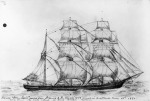
Donald Campbell, along with his wife Sarah Ann McLeod and daughters Sarah Anne and Mary Sarah sailed for Auckland from St Ann’s, Cape Breton, Nova Scotia on the last and largest ship to bring Scottish settlers to Waipu. While Donald had been born on the Isle of Skye, Sarah Ann was Nova Scotian by birth. They married in Cape Breton in a community at St Ann’s which revolved around the teachings of Presbyterian Reverend Norman McLeod. Hard winters and crop failures forced the settlers to look elsewhere, and New Zealand’s fertile land, mild climate and religious freedom were too attractive to ignore. Sarah Ann (McLeod) Campbell died just 6 months after landing and is buried at Waipu Cemetery. Their daughter Mary Sarah, just 2 years old when her mother died, later married John Steven Lozell at Kaikora, Hawke’s Bay.
arrived 28 apr 1863, Auckland — nimroud — earle family
Henry Flockhart Christie, my 2x great-grandfather, was the son of the highly successful Brass & Iron Founder William Walls Christie (owner of Atlas Foundry) of Glasgow. Being the third of four sons, of which the two elder had already entered the iron founding business, Henry chose the adventurous life and headed for New Zealand with his younger brother James, keeping a diary of his voyage on the ‘Nimroud’. A clerk in Scotland, he found employment in banking and was sent to Shortland (now Thames) by the Bank of New Zealand to open an agency in early 1868. Business at Thames was focused on gold buying. Henry managed it for one year. In 1875 he married Henrietta Alice Bush in Nelson. Briefly working at Whanganui, he was sent to Carlyle (now Patea), Taranaki, to open a branch of the bank. He managed the bank in Patea until about 1896, having six children with Alice including my great-grandmother Dorothy Christie. In 1898, Henry and Alice retired to Whanganui, living for 24 years at ‘Awatea’, a large, much-admired property in St John’s Hill. The Christies were among the leading families of the Whanganui social scene and the stretch from Halswell St up to St John’s Hill is known as Christie’s Hill. It is not an official name and is not recorded on any map but it is still used and remembered by Whanganui locals.
arrived jan 1865, Auckland — eveline — sherrock family
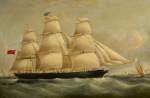
Johann Heinrich Wilhelm “Louis” Kahn/Kühn/Köhn/Koehn, his wife Charlotte Auguste Emilie (Augusta) Hofschneider and their daughter Hannah arrived in Auckland in 1865 from the Cape of Good Hope as part of the Waikato immigration scheme. Both had been born in Prussia, Augusta in Sommerfeld (now Lubsko, Poland), and emigrated separately to Cape Town, South Africa. They married there in 1861 at the German Evangelical Church and, in 1863, welcomed their daughter Hannah Kühn (anglicised to Kahn) who went on to marry in New Zealand, firstly, John Sharp and after his death, Hugh King Irwin. Louis and Augusta arrived by boat from Auckland to the Mauku inlet on 1st February. A son arrived in 1866. Louis was a member of the Mauku-based Forest Rifle Volunteers corps and, in 1869 and 1878 held the license for the Mauku Hotel. He erected a wharf for the convenience of settlers. Unfortunately, it no longer exists as it was lost in 1870. He owned 5 acres of land (his entitlement as part of the Waikato scheme) in Patumahoe. Unfortnately, his business schemes were unsuccessful and he was declared bankrupt in 1872. Augusta died in 1873 and Louis died in 1889 at Mauku. It is not known where either are buried.
arrived 1865, auckland — bombay — sherrock family
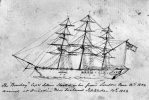
Edward Hall and Margaret Kirker, along with six of their children (including 17-year-old Rebecca Hall, who went on to marry George Daniels Bevin) arrived in Auckland as part of the Waikato Immigration Scheme. Originally from Armagh, Northern Ireland, they had emigrated to Liverpool in 1851 and lived there for ten years. Edward was a cooper by trade. This came in handy, their voyage was an eventful one, the ‘Bombay’ being towed dismasted into Auckland Harbour around North Head by the Curaçoa, who had picked up the ship at Cape Brett. A heavy gale had resulted in the loss of her bowspirit, topmast and all of her sails. Her starboard boat was also lost. During the voyage Edward used his axe to cut the main mast free, as it was broken beyond repair and also made buckets to help bail out water. The family settled at Williamson’s Clearing (later named Bombay after the ship). It was not the green lush landscape of today, but a crude clearing in the midst of thick heavily forested bush. The family was living at Cabbage Tree Swamp, near Mt Albert in the 1870s and at Mt Smart in the early 1880s. He died at his residence in Newton Road in 1888 and is buried at the Symonds St Cemetery. His wife died in 1898 and is also buried there.
arrived 3 Jul 1866, wellington — weymouth — earle family
Robert Charles Earle, my 2 x great-grandfather, arrived as the ship’s surgeon on board the ‘Weymouth’ in July 1866. Born in Totnes, Devon into a wealthy farming family, he trained at Guy’s Hospital in London, being awarded MRCS LSA, Licentiate in Midwifery 1864-1865. He made his way quickly to Whanganui, where he initially saw patients using the Rutland Hotel as a base. He first partnered with Dr Gibson but quickly established his own practice, also becoming surgeon to the Imperial and Colonial forces, Provincial Surgeon for Whanganui, medical superintendent for Whanganui Hospital and a member of the NZ Medical Board. He played a prominent part in early New Zealand racing, being involved in the Wanganui Jockey Club for over 30 years and part of the Union Cricket Club. He went on to marry Eliza Ellen Mason and had six children, including my great-grandfather (who also became a doctor), Maurice Mason Earle.
arrived dec 1866, auckland — ss. auckland — sherrock family
George Daniels Bevin arrived in Auckland via Sydney, New South Wales as a young man of twenty-two. Originally from Marton, Cheshire, he was the son of a farmer. He married Rebecca Hall in 1869 in Auckland and lived in Newton Road, working as a labourer. Together, he and Rebecca raised six children, one of whom, Margaret Elizabeth Bevin, went on to marry Bernard Cuthbert Heath (grandson of Bernard McDonald). He died at the age of 69 and is buried in the Symonds St Cemetery.
arrived abt. 1869, Auckland — ship unknown — sherrock family
John Stafford hailed from Kilkeel, Down, Northern Ireland. A gold miner, it is possible he came to New Zealand via Australia, having tried his hand there first. He settled at Thames (then called Shortland) and in 1870 was mining the ‘Moon on the Mountain’ claim at Shellback Creek. Shellback Creek adjoined the ‘Seven Pillars’ and was near Partington`s Battery. In 1873 he married Jane Alma “Jenny” Sustins and they settled at Waiotahi Creek, having ten children. After the death of Jenny in 1894, John and those of his younger children who were still at home left Thames and went to live in Waihi. He was a good gardener and kept a number of horses on four acres of land. He died in 1921 and is buried at the Shortland Cemetery in Thames.
arrived 19 Jan 1874, wellington — Salisbury — sherrock family
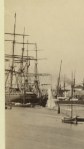
Edward Sherrock and Margaret Erskine sailed from Londonderry, Northern Ireland. For them, arrival in New Zealand was tinged with sadness. They brought with them six children, but arrived with only five. Their son John died aboard ship of pneumonia and was buried in Plymouth when the ship put into port. Edward had a military background, being born in Dinapore, Patna, India to military parents, although his father died when he was one. He enlisted into the 13th Light Infantry at about 18 years, completing service in Gibraltar and the Crimea before transferring to the Capetown Mounted Rifles at Grahamstown. After being discharged due to vertigo, he enlisted in the Westmeath Rifles – Militia Regiment with the rank of Bugler. Margaret was from Down, Northern Ireland. It is not known how she met Edward, but they married in Painestown, Meath in February 1865. After arriving in New Zealand, the family settled initially in Blenheim but later moved to Picton and Tua Marina. They had five more children, including George Sherrock, who married Annie Stafford (daughter of John Stafford and Jane Alma “Jenny” Sustins). Edward lived off his pension payments for the Cape Mounted Rifles and worked as a labourer. Margaret had a milk run in Picton. Edward died in 1883 and is buried at Picton although his grave has never been located. Margaret moved to Palmerston North after his death to be closer to her daughter Louisa. She died in 1925 and is buried at Terrace End Cemetery.
arrived 16 Sep 1877, Wellington — hurunui — earle family
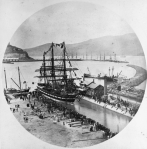
Susannah Elizabeth (Eliza) Pallant, my 2 x great-grandmother, arrived from Ipswich, Suffolk. Born to a cordwainer/shoemaker father, all her family were employed in the boot and shoe trade. In 1871, at the age of 15, she was a boot machinist living with her brother William, a shoemaker also, in Hackney, London. Eliza travelled solo to New Zealand as an assisted emigrant, intending to work as a housemaid. However, her brother William had already arrived in 1875 and another brother, Arthur also settled in Wellington. She most likely lived with William after arrival, as 9 months later, she married Alfred Falkner at his home in Turnbull Street. She and Alfred eventually moved to Kaiparoro and had twelve children, including my great-grandfather, Alexander Falkner. About 1919, she separated from Alfred and went to live in Palmerston North. She died there in 1930 and is buried at Terrace End Cemetery.
arrived abt. Jan 1878, wellington — ship unknown — earle family
Alfred Ormerod Falkner arrived in Wellington in early 1878 via coastal shipping, having sailed from Liverpool via Sydney, Australia on the ‘City of Santiago’ with his brother Victor. While Victor made Sydney his home, Alfred pushed on to New Zealand where he secured a job with the New Zealand Survey Department as a draughtsman. He met and married Eliza Pallant in July 1878 and later worked for the Wellington and Manawatu Railway Company and General Survey Company. He was an engineer also, designing the Eketahuna water supply scheme. He later farmed and owned a sawmill in Kaiparoro, Eketahuna and has been featured in a previous blog post for his role in designing and building the Kaiparoro Memorial Bridge. He died in 1939 and is buried at the Eketahuna Cemetery.
arrived 19 apr 1879, Auckland — city of new york — sherrock family
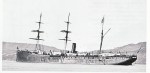
Hugh King Irwin hailed from Raphoe, Donegal, Ireland. He was from a well-to-do family. His father, John King Irwin was a Sub-Inspector of the Glenties and Raphoe Constabulary and his grandfather was the Rev. Charles King Irwin DD, Precentor of St Patrick’s Cathedral, Armagh. Hugh emigrated at the age of 16, arriving in Auckland on the Pacific mail steamship ‘City of New York’ from Sydney, New South Wales. He had a dairy farm for many years at Patumahoe and married widow Hannah Kahn in 1902. They had six children together, including Olive Wilhelmina Irwin, who married Walter Daniel Drain. Hugh died in 1951 in Epsom and is buried at St Bride’s Churchyard Cemetery at Mauku with Hannah.
arrived 2 May 1884, Auckland — British King — Sherrock Family
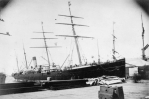
Lucy Ball, a 53-year-old widow, born in Dawley, Shropshire, England made emigration to New Zealand a family affair. Although her husband John Henry Morris had died in 1873, she made the journey from Yorkshire with her daughters Lucy (who went on to marry Henry Ingham), Caroline and Florence, sons Jack and Harry, and married daughter Mary (Morris) Leek and family. Perhaps they were persuaded by another daughter, Emily (Morris) Smith, who had emigrated to Christchurch with her family four years earlier. Lucy worked as a private nurse in Arch Hill before retiring. She died at the Knox Hospital Home in Panmure and is buried at Waikumete Cemetery in Glen Eden, Auckland.
arrived abt. 1888, wellington — ship unknown — earle family
It is not known exactly when John Nevill Johnson, my 2x great-grandfather, arrived in Wellington. He may have come via Australia on coastal shipping. The subject of an earlier blog post, he left his English wife and family in London and embarked upon a new life (and family) in New Zealand. Married in England to Mary Ann Freeman in 1866 in Chelsea, London, he had nine children including my great-grandmother Gertrude Mary Johnson – and at least two other illegitimate children. The family was near destitute most of the time, appearing regularly in workhouse records and, after his disappearance, orphanages and training schools. He never married in New Zealand, but lived in Wellington with married woman Mary Ann Gallon for 30 years and fathered eight more children, of whom, only two daughters survived. He worked for the Harbour Board for a time and was caretaker of Wellington Technical College. He died in 1936 at Wellington Hospital at the age of 92 and is buried in Karori Cemetery with Mary Ann Gallon. Their grave is not marked.
arrived abt. 1899, Auckland — ship unknown — sherrock family
Isabella Chapman was born in 1877 in Sydney, New South Wales, Australia to John Joyce Chapman Jr (born in Stepney, London but emigrated with his family to Sydney by 1850). John Jr was variously a cooper, whaler, farmer and later a member of the Council of Elders in Norfolk Island. Isabella grew up on Norfolk Island, a former penal colony and from the mid-1850s, home to many resettled Pitcairn Islanders, descendants of the Bounty mutineers. From a description by Joseph Campbell in 1879: “The township must, in former days, have been an exceedingly pretty little place, but now a large portion of it is in ruins…Here and there about the town are rows and clusters of pines which give to the place a very pleasing appearance…The soil all over the island is of first rate quality…and growing wild in all parts are lemons and guavas…Almost every settler has his little plantation of bananas, potatoes and kumara (sweet potato)…All kinds of garden flowers do well…[it is a] charming little oasis situated in the midst of the desert ocean…The climate of Norfolk Island is nearly as warm as that of Sydney; but refreshing sea breezes are almost every day experienced…[making] it…pleasant and salubrious…Should any [person] be desirous of visiting Norfolk Island, I can assure them that they will be warmly welcomed by the hospitable islanders; and the pleasure derived from such a visit would be very great.1 It is not known how she met her husband John Whittingham, although, being a master mariner, he may have visited Norfolk Island on several occasions. Isabella and John (the son of Moses Whittingham and Mere Jane Cassidy) lived in defacto status in Auckland for several years, having seven children together before marrying, including Eileen Frances Whittingham, my children’s 2x great-grandmother. John’s first wife was institutionalized for several years, passing away in 1912 after which Isabella and John were free to marry in 1913. They first lived in Eden Terrace and later at 46 Elgin St, Grey Lynn. Isabella passed away in 1947 at the age of 71 and is buried at the Otahuhu Public Cemetery in Auckland.
arrived 20 Nov 1906, Auckland — ss.dorset — sherrock family
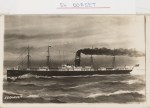
The arrival of Horace Arthur “Dick” Sanders and his mother Julia Pybus has been covered in a previous blog post. Originally from Sheffield, Yorkshire, the whole family emigrated together. Dick became a carpenter in New Zealand and married Clara Grace Ingham (daughter of Henry Ingham and Lucy Morris). Dick and Clara lived all their lives in Malvern Rd, Morningside. Dick died in 1941; Clara died in 1970; Dick’s mother Julia died in 1930. All are buried at Waikumete Cemetery.
arrived 6 dec 1907, wellington — ionic — earle family
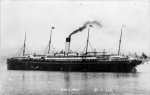
Born in Islington, London, England to John Johnson and Mary Ann Freeman, Gertrude Mary Johnson was the sixth daughter and seventh child (of nine). Her father, featured in a previous blogpost and who arrived in New Zealand about 1888, left the family while she was young and she was brought up in a succession of workhouses, orphanages and domestic training institutions. Gertrude met and married Stanley Waltham Wilton in 1907 in Palmerston North, becoming a farmer’s wife, living variously in Whakaronga, Marton, Reikorangi, Makotuku and Dannevirke. They raised three children – including my grandmother Betty Joan Wilton. Gertrude died in 1945 and is buried at Mangatera Cemetery, Dannevirke.
arrived 14 Sep 1920, Auckland — riverina — sherrock family
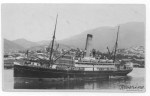
Walter Daniel Drain stepped off the Riverina from Sydney, New South Wales in 1920 at the age of 36 years. Born in Guildford, Surrey, England he had already endured more than most of his age. At 13, he attested for the Army’s Border Regiment at Aldershot, Hampshire, lying about his age in order to serve. Enjoying the regular pay and employment the army afforded, he struggled to conform, getting in and out of trouble numerous times and being court-martialled in 1907. In 1909, at Southend-on-Sea, Essex, England, he married Winifred Jane Streatfield. Together, they had three children. In 1912, for reasons unknown, he left Winifred and made his way to Australia, never seeing them again. In 1914, he enlisted at Melbourne in the Australian Imperial Force and served at Gallipoli as part of the signalling division. A diary which he kept during this time is a fascinating read and remains within the family. One of the most colourful and complicated of my children’s ancestors, he loved women, but found commitment difficult, fathering a daughter out of wedlock with a married woman in 1917 and abandoning them also. He married Kathleen (Nora) Gasson polygamously in 1918 in Victoria, Australia – a son was born later that year to this marriage. (Walter and Nora officially divorced in 1927 after he deserted them also). Not long after he arrived in New Zealand, he married Olive Wilhelmina Irwin (again polygamously), the daughter of farmer Hugh King Irwin and Hannah Kahn. He worked for the tramways and had two daughters, including my children’s great-grandmother, Hilda Irene Drain. The marriage foundered and in 1929 they divorced, Olive remarrying Andrew McHardy in 1933 but losing custody of their children. He married a fourth and final time in 1930 to Violet Beeston and had three more children, reclaiming Hilda and her sister from an orphanage to live with them. Walter died in 1951 and is buried at Waikumete Cemetery.
arrived 11 Jan 1946, wellington — rangitata — earle family
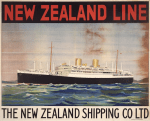
Kathleen May “Kay” Case made her journey to New Zealand solo and pregnant with her first child. Born in Maidstone, Kent, she was a newly-wed, to dashing young Whanganui-born doctor Anthony Maurice “Tony” Earle. Although not technically part of the post-war wave of assisted British immigration (the first draft arrived in August 1947), the advice given to those immigrants would have applied to her: ‘be patient and take time to know New Zealand ways’.2 Kay was a keen gardener, raising three Kiwi sons (including my father) in Whanganui who embodied the spirit of New Zealanders – all were keen sportsmen and enjoyed summers in the sun, camping, fishing and boating. Although she likely resented being called a ‘Pom’ (the slightly derogatory term used for British immigrants), she retained her quintessential Englishness, insisting her grandchildren use correct grammar and pronunciation rather than Kiwi slang. Later, she persuaded her parents and sisters to emigrate to New Zealand also. After many long years in Whanganui, Kay retired to Christchurch after Tony’s death. She died in 2002. Her ashes are interred at Heads Road Cemetery, Whanganui with Tony’s.
arrived 1957, wellington — southern cross — earle family
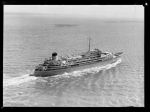
Harry Maulden Case and Mary Louisa “Louie” Theobald, my great-grandparents, emigrated to New Zealand from Kent, England, in their early sixties. Harry was born in Quetta, Bengal, India (present-day Pakistan), the second son of a career Army man, living variously in Dorset, Devon, Cornwall and then in Kent after his father retired. Louie was born at Cliffe at Hoo in Kent and part of a large extended family of step, half and full brothers and sisters as both her parents had had previous marriages. She and Harry married in 1918 in Crayford, Kent and raised three daughters, including my grandmother Kathleen May “Kay” Case, and adopted another daughter from within the family, raising her as one of their own, about 1934. After a successful career as an engineer and later assisting Louie in their general store/post shop in Maidstone, Harry and Louie decided to emigrate to New Zealand in their retirement, for lifestyle and to be closer to and get to know their New Zealand grandchildren. Harry tended an extensive vegetable garden. Within five years, all of their other daughters had also emigrated. Harry died in 1981 and Louie in 1990. They are buried together at Aramoho Cemetery in Whanganui.
Sources:
Claudia Orange, ‘Te Tiriti o Waitangi – the Treaty of Waitangi’, Te Ara – the Encyclopedia of New Zealand, (http://www.TeAra.govt.nz/en/te-tiriti-o-waitangi-the-treaty-of-waitangi/print : accessed 4 February 2024), published 20 Jun 2012, reviewed & revised 28 Mar 2023
Pat Snedden, “Pakeha And The Treaty – Why It’s Our Treaty Too,” MAC (Maori Achievement Collaborative, (https://www.aucklandlibraries.govt.nz/Pages/immigration-to-new-zealand.aspx : published 10 May 2004)
New Zealand Military Historical Society. The New Zealand Land Wars (https://nzmhs.org.nz/the-new-zealand-land-wars : accessed 6 Feb 2023)
New Zealand Ministry for Culture and Heritage, Manatū Taonga. “Treaty of Waitangi,” New Zealand History: Nga korero a ipurangi o Aotearoa (https://nzhistory.govt.nz/politics/treaty-of-waitangi : accessed 4 Feb 2023)
Hoffman, L., Auckland Council. He hītori mō te hanga ā-tāone o Tāmaki Makaurau = A brief history of Auckland’s urban form, Dec 2019 : accessed 7 Feb 2024
Diana Beaglehole, ‘Whanganui region’, Te Ara – the Encyclopedia of New Zealand, (http://www.TeAra.govt.nz/en/whanganui-region : updated 1 Jun 2015)
Jock Phillips, ‘History of immigration – Assisted immigration revives: 1946 to 1975’, Te Ara – the Encyclopedia of New Zealand, (http://www.TeAra.govt.nz/en/history-of-immigration/page-14 : accessed 7 February 2024)
FamilySearch, “Archives New Zealand Passenger Lists “Archives New Zealand, Passenger Lists, 1839-1973,” database with images (https://www.familysearch.org/search/collection/1609792 : accessed Feb 2024)
Auckland Libraries. “Passengers and Vessels – He Taenga ā-Pāhihi, ā-Kaipuke,” database, Kura: Heritage Collections Online (https://kura.aucklandlibraries.govt.nz/digital/collection/passengers : accessed Feb 2024)
Nicola Earle Sherrock. “Falkner Earle Family Tree.” Ancestry (https://www.ancestry.com/family-tree/tree/163515236/recent : 2024)
Nicola Earle Sherrock. “Sherrock Earle Family Tree.” Ancestry (https://www.ancestry.com/family-tree/tree/101004063/recent : 2024)
Subscription databases: Ancestry, FindmyPast
Footnotes:
- Campbell, Joseph ‘Norfolk Island and its inhabitants,’ in Anglicanism in Oceania, Project Canterbury; Transcribed by the Right Rev Dr. Terry Brown, Bishop of Malaita, Church of the Province of Melanesia, 2006 (http://anglicanhistory.org/oceania/campbell_norfolk1879.html : accessed 7 Feb 2024) ↩︎
- Ministry for Culture and Heritage. ‘Assisted immigration resumes after war’, New Zealand History (https://nzhistory.govt.nz/assisted-immigration-resumes-after-war : updated 8 Jul 2020) ↩︎
As always, any errors or omissions are mine alone. Feel free to share your immigrant or Waitangi Day stories or information about any of the above with me! -- Nicola
 Kinship Genealogy Co.
Leave a comment