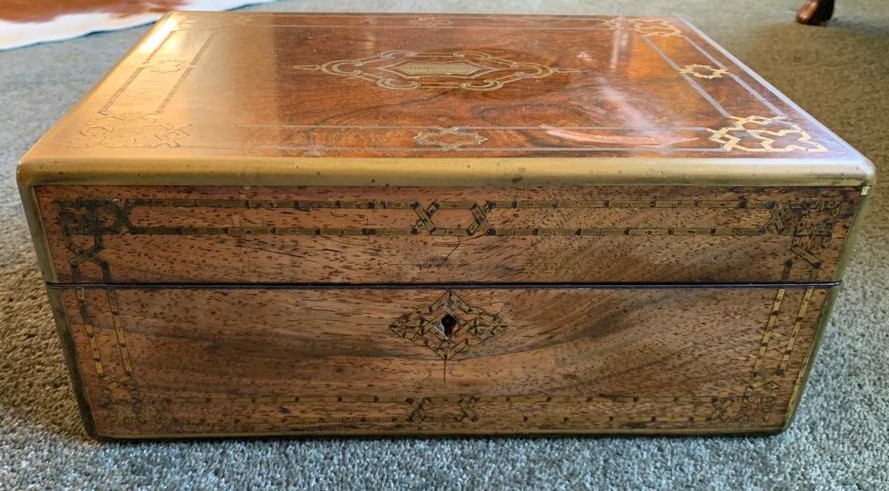
The origin of the travelling case is probably French, dating back to the late 14th century. Over time these cases evolved from functional travel items into luxury accessories. In England, by the end of the 18th century modest versions were being made to accompany upper-class gentlemen during travel – and a way of displaying their owners’ wealth and position.1 A gentleman’s dressing case would usually contain bottles and jars for colognes, aftershaves and creams as well as essential shaving and manicure tools and items for writing.
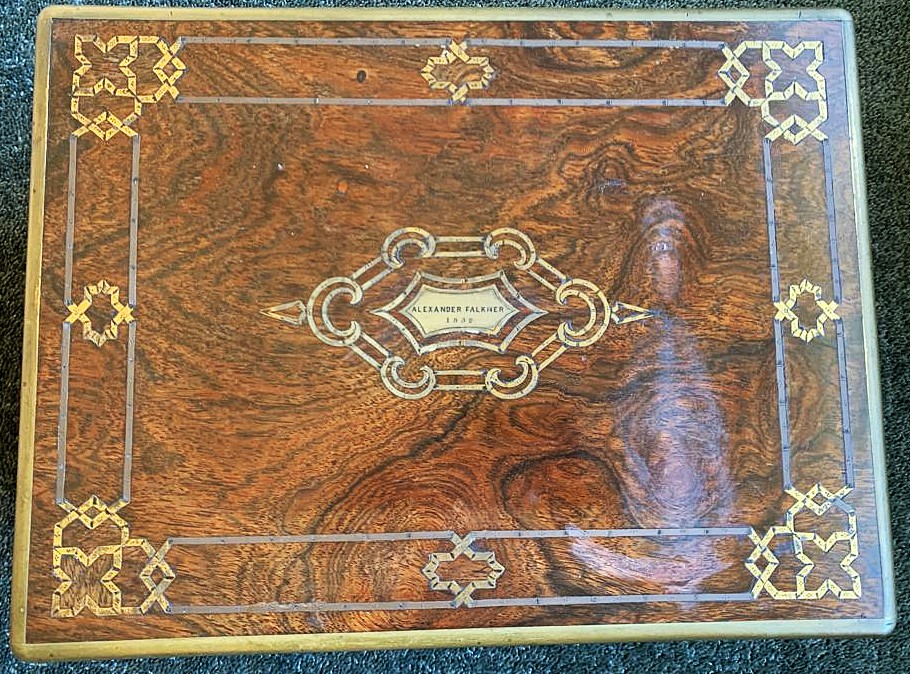
Alfred Falkner brought such a case with him when he emigrated from England (via Melbourne). The case belonged to his father, Alexander Falkner – the lid is engraved with his name and the year 1852 when Alexander married Mary Ormerod. Likely, it was a wedding gift to Alexander from his father, Andrew Falkner. By gifting it to Alfred, it served as a lasting reminder of family as he set out, along with thousands of other continental Europeans for the colonies.
The case is inlaid with velvet and contains the essentials: cutthroat razors, clothes brush, cologne bottle, button hook and so on. With time, scissors, pen knife and nail file and goodness knows what else have gone missing, but it is a fabulous family heirloom and antique.
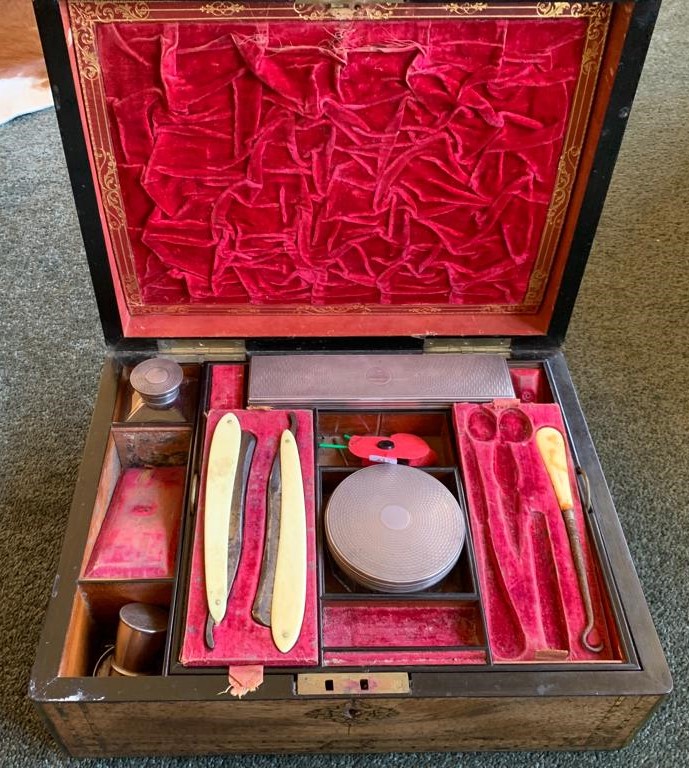
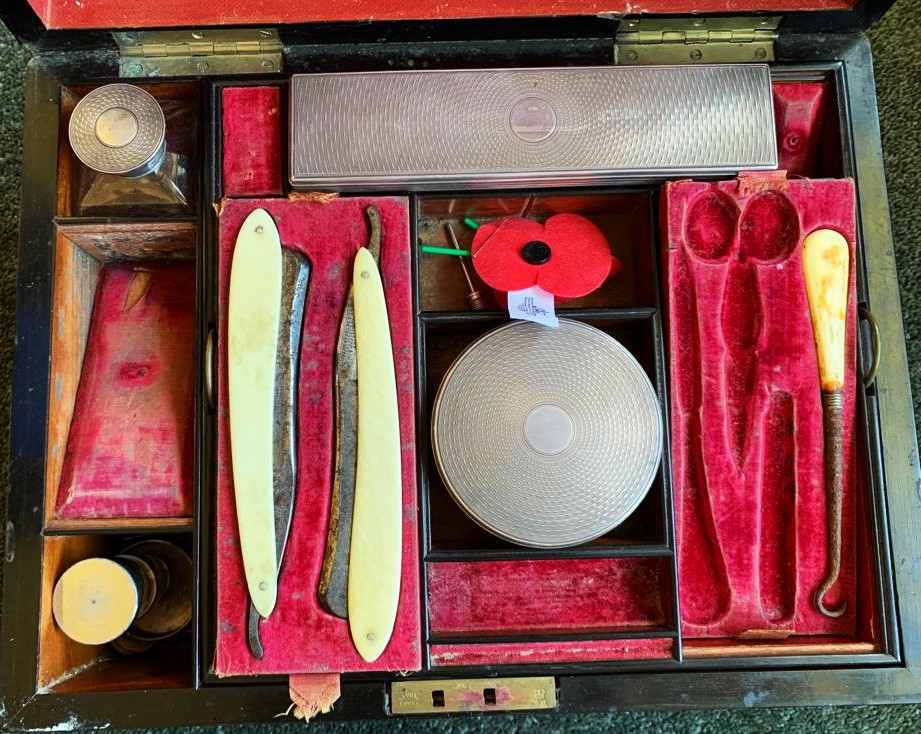
It is currently in the care of Alfred’s great-grandson, Alexander Falkner, who was named after his grandfather and great-great-grandfather.
Are you a Falkner relative and inherited an heirloom? Please consider sharing photos and stories so we can all benefit!
Sources:
- ‘The Dressing Case in Britain,’ Antique Ethos (https://www.antique-ethos.co.uk/dressing-case : accessed 16 Sep 2024) ↩︎
 Kinship Genealogy Co.
Leave a comment