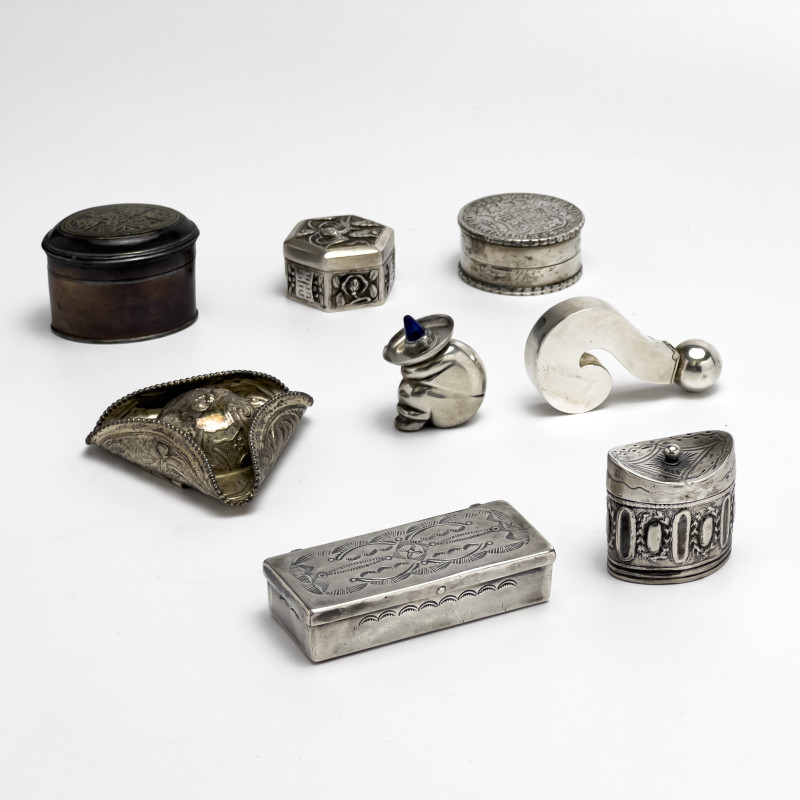
It is thought that the use of snuff, a type of smokeless tobacco, originated in Central and South America before the advent of the Spaniards. It is likely that they were the nation who first brought the habit to Europe.
Appearing as early as the 16th century, snuff boxes were most popular in Europe from the 17th to the 19th centuries. Thought to have health benefits, powdered tobacco was sniffed, or ‘snuffed’, up the nose to help clear the head. It tended to be used by wealthier members of society, whilst the less wealthy smoked tobacco in clay pipes.
As well as being a fashionable accessory, snuff boxes were also a popular keepsake and often presented as gifts and awards. The boxes were sometimes used to carry other small delights such as scented flowers or sweets.1
Alfred Falkner brought his gilt snuff box to New Zealand when he emigrated in 1877. The box itself is small, about the length of a pen. The gold-washed interior was commonly used on snuff boxes to resist corrosion and staining.
Upon the lid is the engraved or stamped mark of the Scottish Falconer clan (from which the variation Falkner derives) with the latin inscription Vi et Industria = By Strength and Industry.
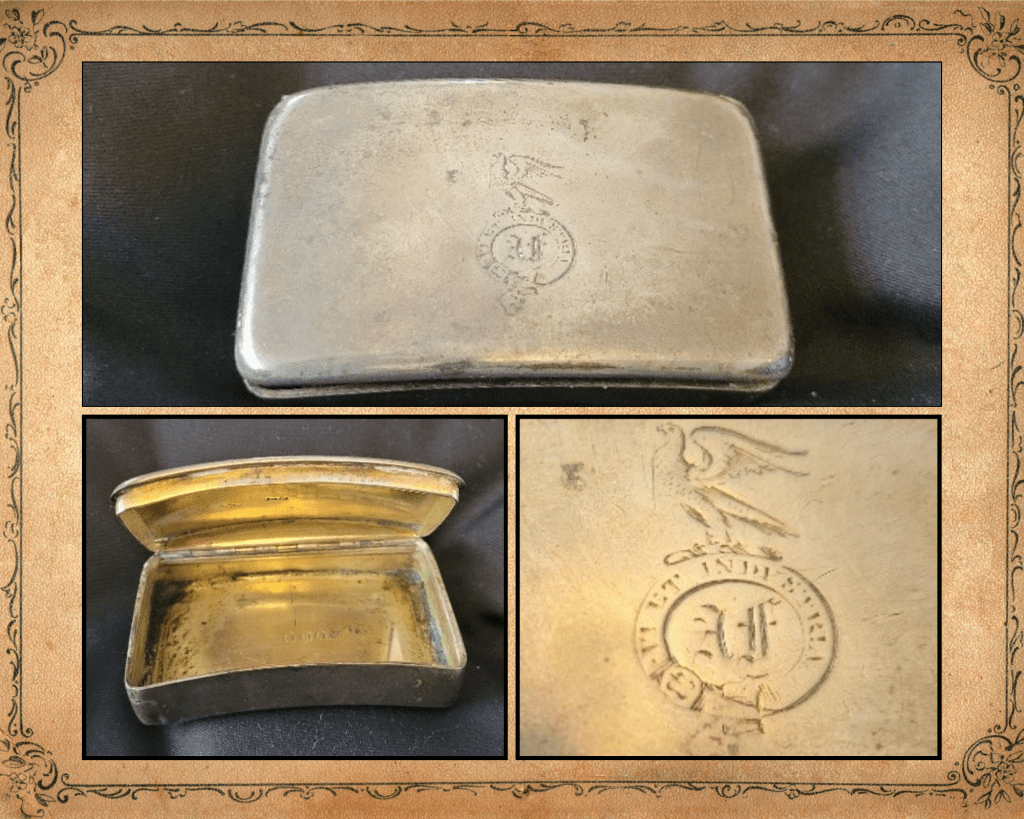
The snuff box is a treasured heirloom and is currently in the care of Alfred’s great-grandson, Brian Falkner, a descendant of Alfred’s son Alexander Falkner.
Are you a Falkner relative and have inherited an heirloom? Please consider sharing photos and stories so we can all benefit!
Sources:
- “Snuff Boxes in Museums Victoria’s Collection”, Museums Victoria (https://collections.museumsvictoria.com.au/articles/17575 : accessed 1 Jun 2026). ↩︎
 Kinship Genealogy Co.
Leave a comment